Diastasis Recti Recovery in Central Indiana
Your core just isn't the same. You've done the crunches, the planks, maybe even a trainer's "core program," and the gap is still there, or the doming still shows when you sit up. It's not in your head, and it's not too late to fix. Diastasis recti physical therapy can close the gap, rebuild real core strength, and get you back to feeling like yourself again.
What causes diastasis recti?
Diastasis recti is a separation of the two sides of the rectus abdominis muscle along the connective tissue at the midline, called the linea alba. It's most common during and after pregnancy, as the growing uterus stretches the abdominal wall. But no two cases are the same. Some gaps close on their own. Others stay wide for years without the right kind of help, and that's not a sign you did something wrong. Knowing what's actually driving your separation, not just that it exists, is what makes a recovery plan work.
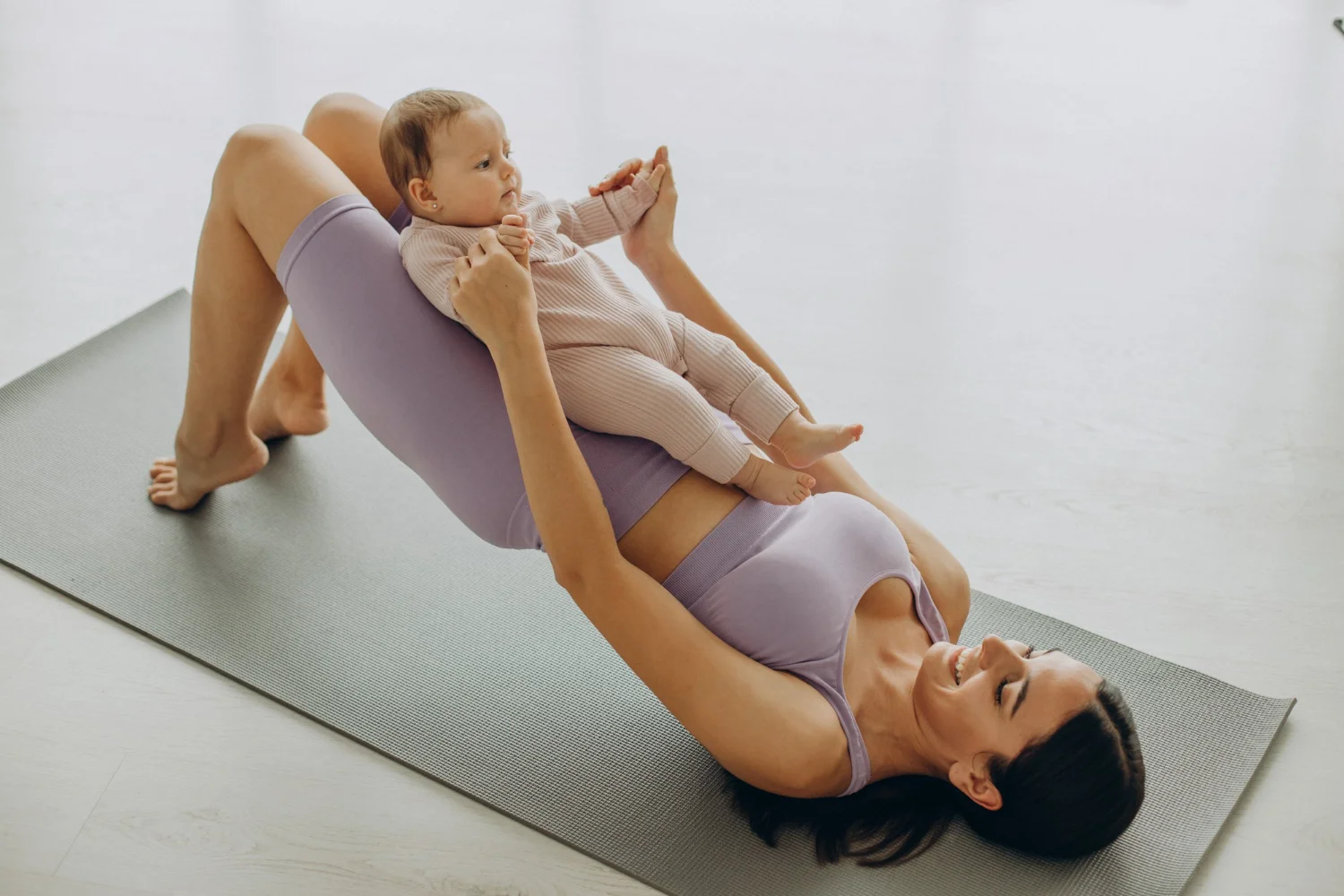
As your baby grows, the uterus stretches the abdominal wall and the linea alba widens to make room. This is a normal, expected part of pregnancy. For many women the gap narrows on its own in the weeks after delivery, but for others it stays wider or deeper than it should, especially without the right kind of core rehab.
Each pregnancy asks the connective tissue at the midline to stretch again. With repeated stretching, the linea alba can lose some of its ability to recoil back to its original tension, which is why diastasis recti is often more pronounced or persistent after a second or third pregnancy.
Returning to crunches, sit-ups, planks, or heavy lifting before the deep core has been properly reconditioned can increase doming or bulging at the midline instead of closing the gap. The order and progression of exercise after birth matters just as much as the exercise itself.
Hormones like relaxin loosen connective tissue throughout the body during pregnancy to prepare for delivery, and everyone's baseline tissue elasticity is a little different. These factors influence how much separation happens and how readily it closes back up afterward.
Chronic breath-holding, straining, or poor coordination between the diaphragm and pelvic floor increases pressure inside the abdomen and pushes outward against an already stretched midline. Learning to manage that pressure is a core part of closing the gap for good.
Diastasis recti is most common postpartum, but it can also develop from significant weight fluctuation, abdominal surgery, or repeated heavy lifting without adequate core support, which is why it occasionally shows up outside of pregnancy as well.

How physical therapy in Central Indiana helps.
A smaller measurement isn't the goal. A core that works is. We start by measuring the width, depth, and tension along your linea alba, then look at how your breathing, posture, and pelvic floor are working with (or against) your core. Hands-on manual therapy addresses tension and mobility restrictions in the abdominal wall and surrounding tissue. From there, we retrain your deep core, the transverse abdominis, to coordinate with your breath and pelvic floor before we ever add load back in. Strengthening comes last, and it's progressed carefully so your core closes the gap instead of widening it. Whether your diastasis is from a pregnancy last year or one from a decade ago, the tissue can still respond to the right rehab.
What to expect from your recovery.
Evaluation
We measure the width and depth of your separation, assess tension along the linea alba, and evaluate your breathing, posture, and pelvic floor coordination. No guessing. Just a clear picture of what your core needs to recover well.
Core reconnection
Hands-on techniques address tissue tension first. Then we retrain your deep core and pelvic floor to work together with your breath. This is the foundation the gap closes on top of.
Progressive strengthening
Strength gets rebuilt in a sequence that respects your healing tissue, moving you back toward lifting, exercise, and daily activity without doming, straining, or setbacks along the way.
I worked with Dr. Jordan on diastasis recti PT and am so incredibly thankful for her guidance, support, and education through my postpartum trenches. I love how individually-tailored the care and treatment planning is. Thoroughly enjoyed each session!
Pain rarely travels alone.

Postpartum Recovery
Diastasis recti often comes hand in hand with broader postpartum healing. We treat the whole recovery, not just the gap.

Musculoskeletal Dysfunction
A separated core changes how your whole body moves. We address the compensations that follow.
Back Pain & Sciatica
A weakened core often shows up as low back pain. Restoring core function takes pressure off your spine.