Pelvic Pain Relief in Central Indiana
The scans come back normal. Every provider says everything looks fine. The pain is still there, every day. If chronic pelvic pain has become something you manage instead of something you expect to resolve, there is a real path forward, one that starts by treating your whole body instead of just naming the symptom.
What causes pelvic pain?
Chronic pelvic pain is rarely one single thing. It's usually muscle, nerve, and joint issues layered on top of each other until the whole region feels guarded and reactive. Naming the symptom isn't the same as finding the cause. Knowing what is actually driving your pain is what separates a plan that only manages flare-ups from one that gets to the source.
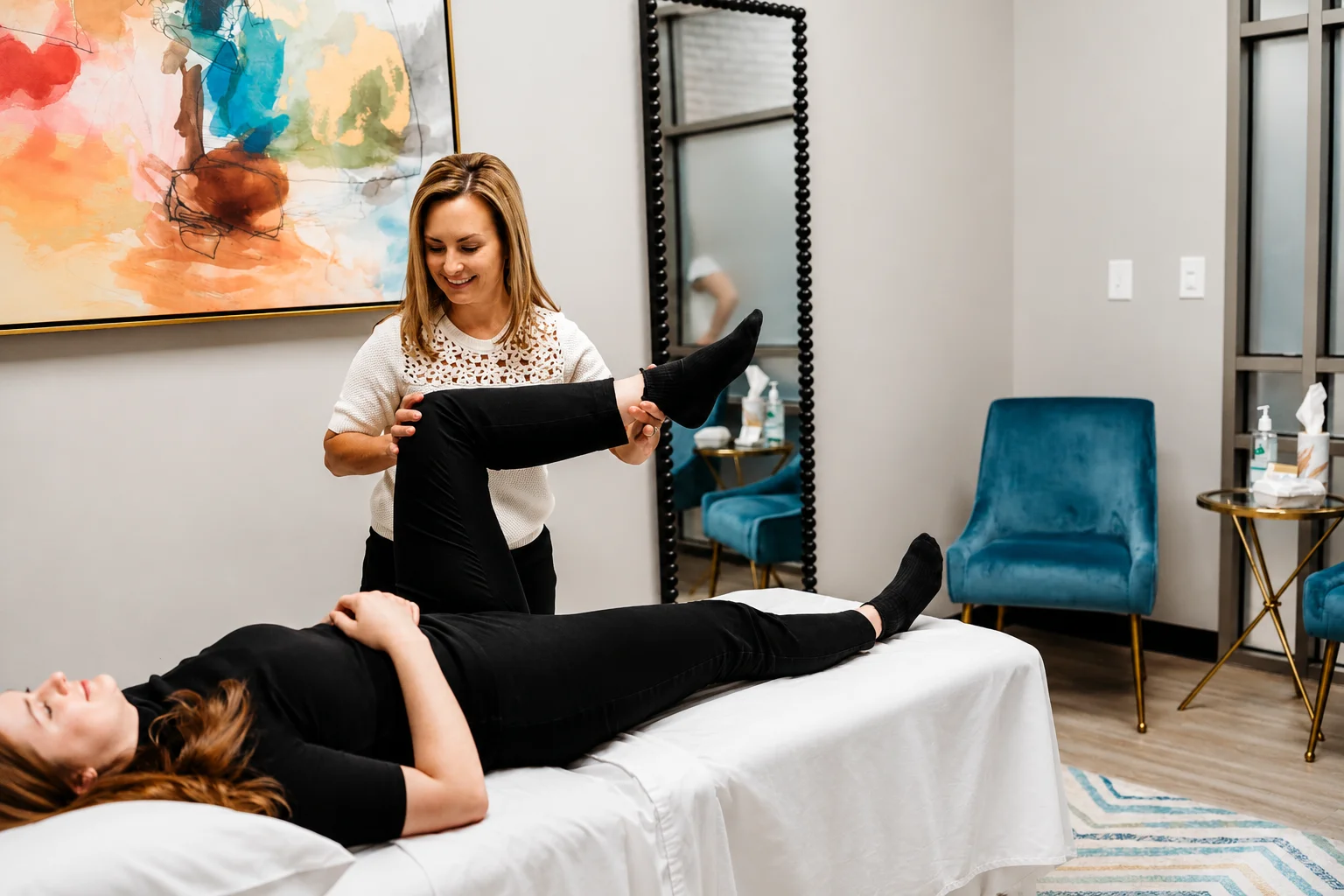
The pelvic floor is a group of muscles that support your bladder, bowel, and reproductive organs. When those muscles become chronically tight, guarded, or unable to relax, they create deep, aching, or sharp pain that can be mistaken for an organ problem. This is one of the most common and most treatable drivers of chronic pelvic pain, and it responds well to hands-on, targeted therapy.
When pain persists for months or years, the nervous system itself can become more sensitive, amplifying signals that would otherwise be mild. Nerves that run through the pelvis, including the pudendal nerve, can also become irritated or compressed by tight surrounding tissue. Calming this sensitivity is often just as important as addressing the original source of pain.
Scar tissue from a C-section, hysterectomy, hernia repair, or a difficult vaginal delivery can restrict how tissue moves and glides. Restricted scar tissue pulls on surrounding structures long after the incision has healed, creating pain patterns that are easy to overlook if no one is checking the tissue directly.
Endometriosis often leaves behind pelvic floor guarding and myofascial pain that persists even after the underlying tissue growth is medically managed. The muscles brace around the pain for so long that the bracing itself becomes its own pain generator. Physical therapy addresses that secondary muscular component directly.
The hips, low back, and sacroiliac joints share nerve pathways and muscle attachments with the pelvis. Dysfunction in any of those areas can refer pain into the pelvis even when the pelvis itself is not the primary problem. A full-body evaluation is what catches these referral patterns instead of treating the pelvis in isolation.
Straining, holding patterns, and pelvic floor muscles that will not fully relax during bathroom habits can create or worsen pelvic pain over time. These patterns often develop slowly and go unnoticed until the pain becomes constant. Retraining coordination between the pelvic floor and the bladder or bowel is often part of the solution.

How physical therapy in Central Indiana helps.
If you've already tried physical therapy that focused only on your pelvis and stalled out, this is different. Chronic pelvic pain responds to hands-on, whole-body care, not isolated exercises. We start with an internal and external evaluation to find exactly where the tension, restriction, or nerve irritation is actually coming from. Then we use manual therapy to release tight pelvic floor muscles, mobilize scar tissue, and restore normal movement through the hips, low back, and pelvis. We teach you how to breathe, sit, and move in ways that stop re-triggering pain. We rebuild coordination and strength in muscles that have been guarding for too long. The goal isn't managing your next flare-up. It's a pelvis and core that finally work together, so pain becomes rare instead of constant.
What to expect from your recovery.
Evaluation
We take a full history and evaluate your pelvic floor, hips, and low back together, not in isolation. We check for muscle tension, restricted tissue, and movement patterns that could be driving your pain. No guessing, no generic protocol. You leave your first visit understanding the real source of your pain, not just the symptom you came in with.
Hands-on treatment
We use manual therapy to release tight pelvic floor muscles, mobilize scar tissue, and calm sensitized nerves. You get breathing and relaxation techniques to practice at home between visits. The guarding starts to ease. The constant background tension starts to let go.
Progressive strengthening
As pain settles, we rebuild strength and coordination through your core, hips, and pelvic floor. We teach you how to sit, move, and live your daily life without recreating the problem. The goal is lasting control, not a plan you repeat every few months.
I started going to RYC to help with hip pain I was experiencing during pregnancy, and also to prepare for labor and delivery. The care I received and the exercises that Dr. Erica helped me with led to an easier and shorter delivery compared to my first!
Pain rarely travels alone.

Endometriosis Care
Endometriosis often leaves behind pelvic floor guarding long after the underlying condition is managed. We treat that muscular piece directly.
Bladder & Bowel Dysfunction
Pelvic pain and bathroom dysfunction often share the same root cause. Retraining the pelvic floor can improve both together.
Sexual Dysfunction
Pain with intimacy is often tied to the same pelvic floor tension driving your pelvic pain, and it responds to the same hands-on care.